By Maria Raquel
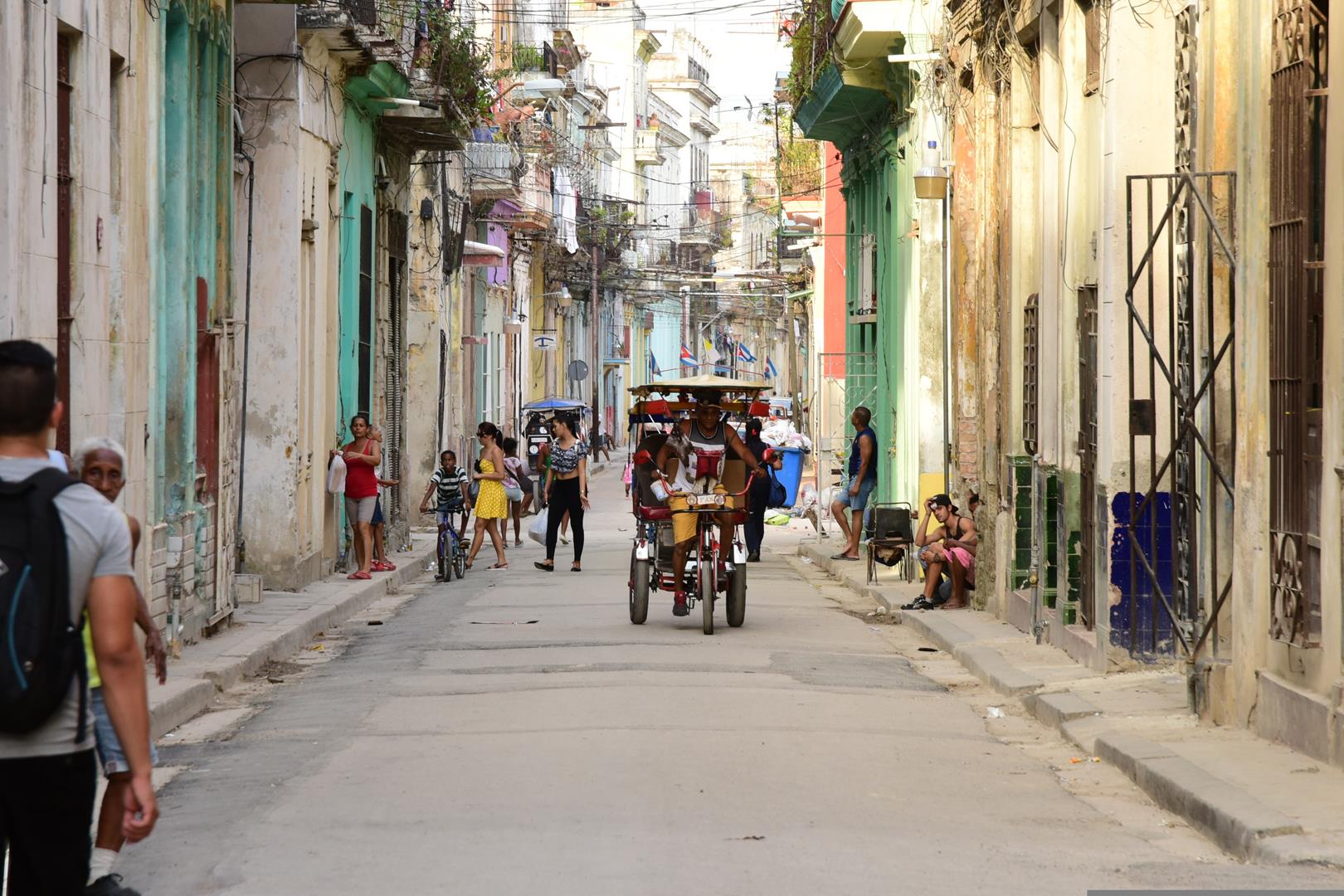
Donald Trump did not wake up one morning suddenly worried about Venezuelan democracy. Venezuela entered the radar because it has oil — a lot of oil — and because Nicolás Maduro turned the country into a cheap, broken, politically fragile asset. For Trump, this is not a humanitarian crisis. It is a business opportunity.
✅🕒 Published on January 8, 2026 - 19:26
For years, the end of the world had a date. Not set by religious prophecy, but by technical reports, polished PDFs, and Silicon Valley insiders with too much access to microphones. Artificial intelligence would not merely change the world — it would end it. In 2027. Then 2030. Now, perhaps 2034. The AI apocalypse has officially entered indefinite postponement mode.
✅🕒 Published on January 7, 2026 - 18:30
The sky is getting lower. Literally. In 2026, SpaceX will begin moving around 4,400 Starlink satellites to a lower orbit, descending from 550 to roughly 480 kilometers above Earth. The official justification is space safety: fewer collision risks, faster reentry in case of failure, and adaptation to the solar cycle. At first glance, the decision seems purely technical. In reality, it says far more about the current stage of humanity’s relationship with space than about orbital physics.
✅🕒 Published on January 4, 2026 - 17:07
Everyone thinks they know everything about the Titanic. The ship sank, the band played, Jack froze to death, end of story. But like almost everything in life, the real problem wasn’t the iceberg — it was hesitation. And that applies just as much to 1912 as it does to 2026, work meetings, and badly managed relationships.
✅🕒 Published on January 3, 2026 - 17:35
Social media has never been just entertainment. It has become a space for expression, identity, and, for many, the only available stage. In recent years, however, this territory has increasingly been framed as a public health risk. France and Australia have taken decisive steps: minors out of social platforms.
✅🕒 Published on January 2, 2026 - 15:28
Zohran Mamdani assumed the mayoralty of New York in the very first minute of 2026, far from the city’s glittering surface. The swearing-in took place underground, in a subway station deactivated in 1945. The gesture was symbolic and calculated: descend before governing, look at the city from below before attempting to change it from above.
✅🕒 Published on January 1, 2026 - 13:39
At increasingly shorter intervals, satellite operators receive alerts about dangerous close approaches in orbit. At distances of just a few kilometers — sometimes only a few hundred meters — objects travel at roughly 28,000 kilometers per hour. They are not asteroids or external threats. They are human leftovers. The space surrounding Earth has entered a state of permanent risk.
✅🕒 Published on December 31, 2025 - 18:14
Starbucks’ decision to close around 400 stores across the United States, with a direct impact on cities like New York and Los Angeles, represents more than an operational adjustment. It marks the end of a cycle of urban expansion based on maximum presence and the beginning of a strategy focused on efficiency, profitability, and cost control.
✅🕒 Published on December 30, 2025 - 18:13
In an industry built on permanent exposure, Brigitte Bardot made the most radical gesture possible: she refused to keep being seen. While cinema, the press, and the public demanded more, she chose less. There was no formal farewell, no legacy strategy. There was only an exit.
✅🕒 Published on December 28, 2025 - 19:19
The climate did not spiral out of control overnight. It was pushed, stretched, and ignored for decades until it responded in the only way possible: by exaggerating. Extreme heat in Brazil and out-of-pattern snowfall in New York are visible symptoms of a long process, not a sudden accident.
✅🕒 Published on December 28, 2025 - 19:16